

יציאת אתיופיה
Or, the modern-day exodus story of the Ethiopian Jews

Every year, we sit around a Passover Seder — still the most commonly-observed tradition among Jews around the world — and tell the story of the exodus from Egypt, when the Israelites were forced to flee across the Red Sea and the desert en route to the Holy Land, before their bread could even have time to rise. The food culture and mimetic actions of this experience are meant to recall a story long since past, to see ourselves as people still being guided and protected by God, en route to a land that was supposed to be a safe place in a world of hatred. Little do many of us realize though that there is more modern symbolism in this act than our own experiences of precarious freedom, uncertain safety, and connection to Israel; indeed, there is a modern community that participated in their own Exodus, their own desert walk to the Red Sea to get to Israel, but instead of Egypt, they came from Ethiopia. Instead of יציאת מצרים it was יציאת אתיופיה.
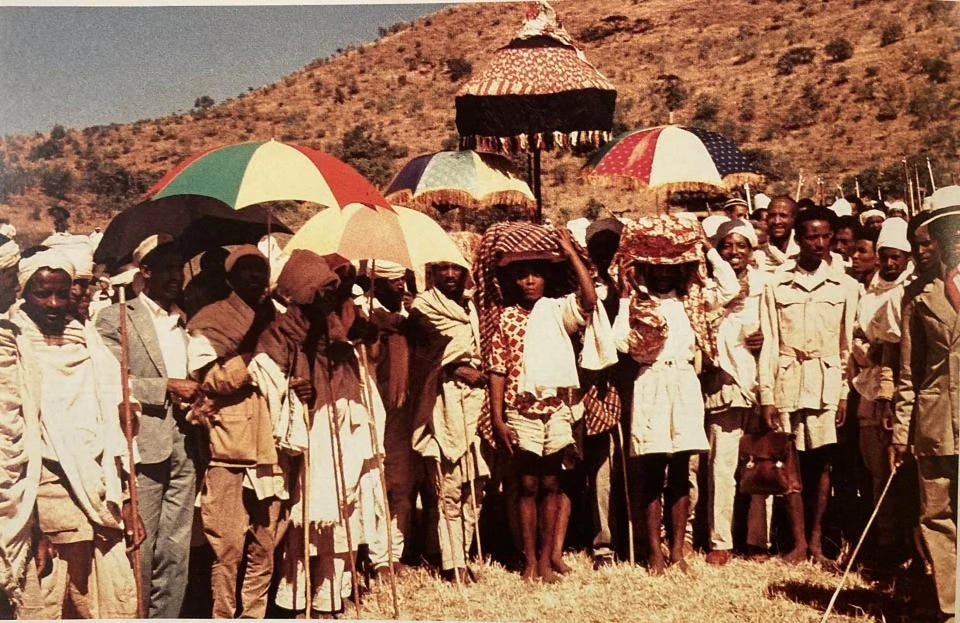
Next week marks Sigd, a holiday unique to the Ethiopian Jews; taking place 7 weeks after Yom Kippur (somewhat like how Shavuot takes place 7 weeks after Passover), this annual holiday is meant to commemorate the 2000-year longing to return to Eretz Yisrael. Evidently, this holiday stretches back to the period of Ezra and Nehemia, two leaders who championed the return of Jews to Jerusalem in the 6th century BCE under Cyrus the Great. Much like Shavuot as well, the holiday focuses on the ritualization of the giving of the Torah at Mount Sinai. Celebrations of Sigd seem to be a mix of a number of different Jewish holiday traditions: it is a combination of Yom Kippur’s “next year in Jerusalem!,” Shavuot’s Torah, and Rosh Hashanah’s Tashlich. In Ethiopia, these Jews would go to the top of the highest mountain nearby (obviously meant to be a stand-in for Mount Sinai) carrying rocks, which they would then discard after prayer on the mountain-top, symbolizing the discarding of their sins from the year before. It’s then celebrated with a traditional Shabbat meal, including doro wat (a chicken stew) and dabo, a pot-baked Shabbat bread with warming spices.

But after the assassination of Emperor Haile Selassie in 1974, the position of Jews in Ethiopia, a community that had been there since before Christianity existed, began to crumble. Relatively idyllic childhoods, spent planting and gathering, in the wilderness, and in broad acceptance, came to an abrupt end. Much of the modern antisemitism seen in the West today is a direct extension of the USSR. In the 1967 war, which was yet another proxy battle in the broader cold war, the USSR chose to support the Arabs militarily. Although Israel was not being supported by the US yet, the Israeli victory over — and abject humiliation of — the USSR-supported Arabs was not to be borne. In the months after, the USSR began a new-brand of state-sponsored antisemitism — antizionism.
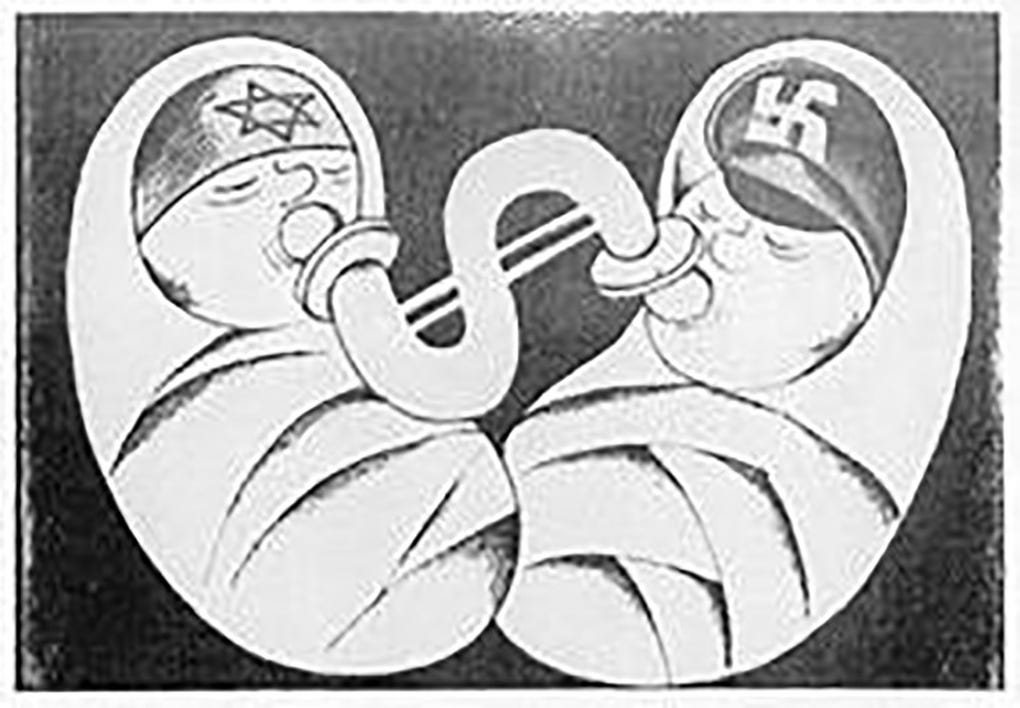
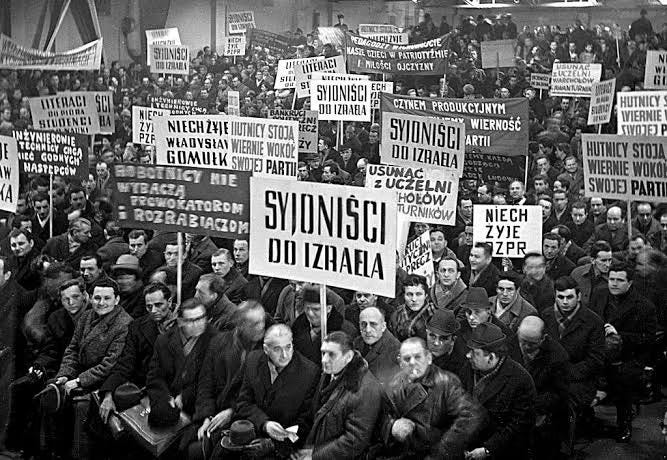
In Cold War Soviet lingo, Jews became ‘disloyal’ to the Soviet state unless they professed their hatred of Israel — of course, that didn’t end up protecting most of them. Jews became Nazis, and Israel became an extension of the “West.” They started accusing Israelis of fascism, Nazism, and Western colonialism — despite the fact that none of these labels applied. Indeed, the 1967 war was fought because the USSR-supported Arab countries closed the Straits of Tiran to Israel and brought armies numbering 300,000 men and thousands of armaments to sit along the borders of the country, with the Egyptian Prime Minister boasting about how they were set to “finish what Hitler started.” But when the US started supporting Israel after the war, their fate in the Soviet eyes was complete. The next year, there was an open antisemitic (note: framed as ‘antizionist’) purge in Poland, with its last Jews being forced to leave the country in droves.
When Haile Selassie was killed in a coup d’état, the new leadership imposed traditional ‘Marxist-Leninist’ values on the Ethiopian state. With direct support from the USSR, Ethiopian Jews began to feel the pressure immediately. Many of these Jews, as early as 1975, began attempting to flee to Israel to safety themselves, despite strict laws refusing their exit. This was preceded by Sephardic Rabbi Ovadia Yosef’s ruling that they were descendants from the Tribe of Dan, one of the 10 lost tribes from the Assyrian conquest in 722 BCE, reinforcing their historical and Halachic “Jewishness” needed for Aliyah.
Ethiopian families began stealing away in the dead of night, walking towards Sudan. Unable to travel during the daytime, they hid in highly-vegetated areas, before resuming walking at night. On the long road to Israel, via Sudan, they were unable to make dabo or injera, the traditional Ethiopian-Jewish breads. Thus, the women prepared Kita, an unleavened bread made with flour, salt and water for their families to eat on the road. Their own walking exodus, fed with their own version of matzos, en route to the same Holy Land, just 4000 years later.

Next week’s Sigd was recognized by Israel as a national holiday some years ago, and now is a day marked with traditions that are distinctly both Ethiopian and Israeli. The wonderful Ethiopian cookbook author, Beejhy Barhany, suggests a couple of dishes to prepare to best-celebrate for Sigd — and they’re the foods traditional to an Ethiopian Shabbat table. Much like Ashkenazi Jews have Challah and Chicken soup, Ethiopian Jews have Dabo (bread) and Doro Wat (a chicken stew.) Dabo is a pot-cooked bread baked with warming spices, like cinnamon, berber, and and Ethiopian version of cardamom. See the recipe from Vered’s Israeli cooking here. Doro Wat, like every good chicken stew, requires many aromatics (in Ethiopian cooking, those tend to be garlic, ginger and onion) and a long cooking time. See a traditional recipe here.
Sigd may fall on a Thursday this year, but in my home it will be observed with a shabbat-like meal, with some different spices but the same amount of love. May we remember the very real life connections even our oldest stories have with today, and also be reflective of the dangers of Soviet-style antisemitism, trussed up with a different name for acceptability’s sake. There’s a reason that you never see FSU (Former Soviet Union) or Ethiopian Jews on the front lines of campus protests draped in Keffiyehs, seeking safety from the outside — they know, from first hand experience, where Soviet antizionism ultimately leads.
May we never find out for ourselves.
Shabbat shalom.
Fabulous article.